
Horace Greeley, the famed creator of the New York Tribune, was born on February 3, 1811. He entered his glory days as an editor during an exciting time in America’s history. Opportunity abounded, especially in the unclaimed territory of the West, where America’s families were rushing. Greeley staunchly supported westward expansion with the celebrated line, “Go West, young man, and grow up with the country.” Or did he?
Table of contents
Horace Greeley and the West

A perusal of Greeley’s writings suggest that his words have been frequently misquoted and misapplied. To those who sought to escape poverty, Greeley unhesitatingly said, “Go West!”
But Greeley’s idea of “going West” was simply getting out of the city. He advocated settling the promising farmlands of the still sparsely settled Midwest. Places like Iowa and Illinois offered the most hope for young Americans, as they offered employment and opportunity.
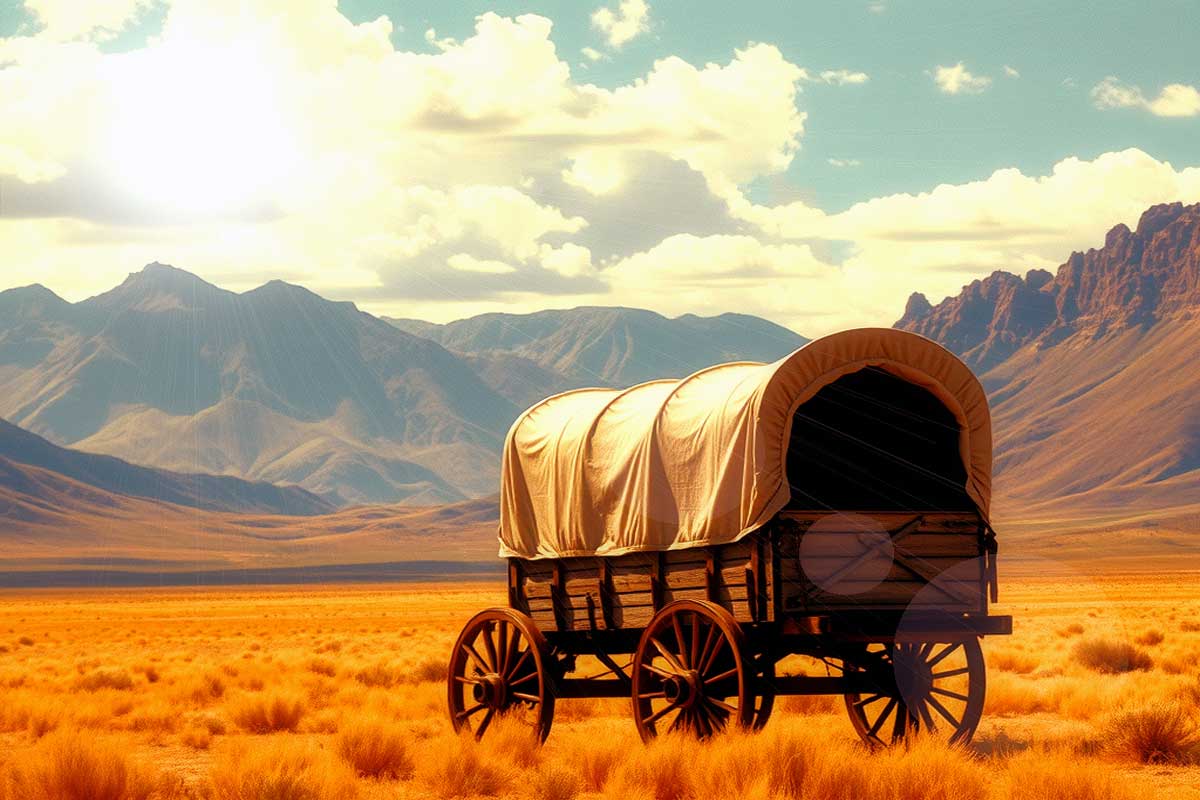
Traveling across the plains and mountains in a covered wagon, however, was “palpable homicide” according to Horace Greeley. If the migrating masses weren’t murdered by Indians, they would undoubtedly starve to death. For many years, Greeley did his utmost to discourage the pioneers from their mad fancy.
The Westward Expansion
Maybe it was a little mad. Countless historians have tried to give a reason for the westward movement, but with limited success. The stories told by propagandists were so painfully far-fetched, who could really believe them? Maybe it was healthier on the Pacific coast than in the southern swamps, but the frail would have to survive extreme heat, drenching rains, early snowstorms, and other types of exposure before they arrived. Those seeking economic freedom could still find it in some of the Eastern states. And as for the Manifest Destiny doctrine bellicose politicians were spouting forth, what effect could British possession of the distant Northwest possibly have on the Americans living just south of the British possession of Canada?
Perhaps the only way to explain westward expansion is to recall the mentality of the time. The days of logical Constitution-writing were over. America had embarked on a new era — an era not of reason, but of romance. Westward expansion did little to appeal to the unimpassioned calculations of the mind, but it certainly captivated the imagination and thrilled the nerves.
Suggestions
Have your students do one or more of the following (resources below will help):
- On a map, locate Iowa and Illinois. Considering Greeley meant the farmlands of the Midwest, explain why he might view “traveling across the plains and mountains in a covered wagon” very unwise.
- Learn more about Daniel Boone.
- Watch the animated atlas (resource below). Draw a map indicating the original thirteen colonies. Draw a second map showing the Louisiana Purchase. (Map resources below.)
- Explain the contribution of Lewis and Clark.
- The route west was about a 2000-mile journey across the country. What type of challenges did those traveling west have to face?
- Read about Abraham. Why did God commend his obedience?
- Would you go west? Leave family and friends to travel over unknown territory for the promise of something better at the end of the journey? Write a brief paragraph explaining why or why not.
- Write a journal description of one day in your life on the trail west.
- There were several trails west. Which one would you choose? (See Migration Trails below.) Copy this trail on a map.
- Learn more about the Oregon Trail.
- Choose another aspect of Westward Expansion to study.
- Write a newspaper account of the journey west (the resources below should provide the information you need).
- Buffalo Bill captured the imagination of the West. Learn more about him (see resources below).
- Copywork:
- Primary source publication of Horace Greeley: “Go West,” 1871.
- Younger students can copy the first sentence on drawing and writing paper.
- Older students can copy the full document. On the next day, older students can try writing the original from memory (really capturing the meaning of the sentences).
Further Investigation
“Horace Greeley”
Chapter from Hidden Treasures by Harry A. Lewis that offers a brief but interesting biography.
American Pioneers
Brief definition at Montana State University.
Western Frontier Life in America
For those that ask why pioneers went west.
What Pioneers Packed to Go West
Great detail with illustrations.
Traveling the Emigrant Trails
What it was like from the National Park Service.
Wagons on the Emigrant Trails
What their wagons were like from the National Park Service.
Crossing the Plains, 1865
Eyewitness accounts at EyewitnessToHistory.com of what it was like.
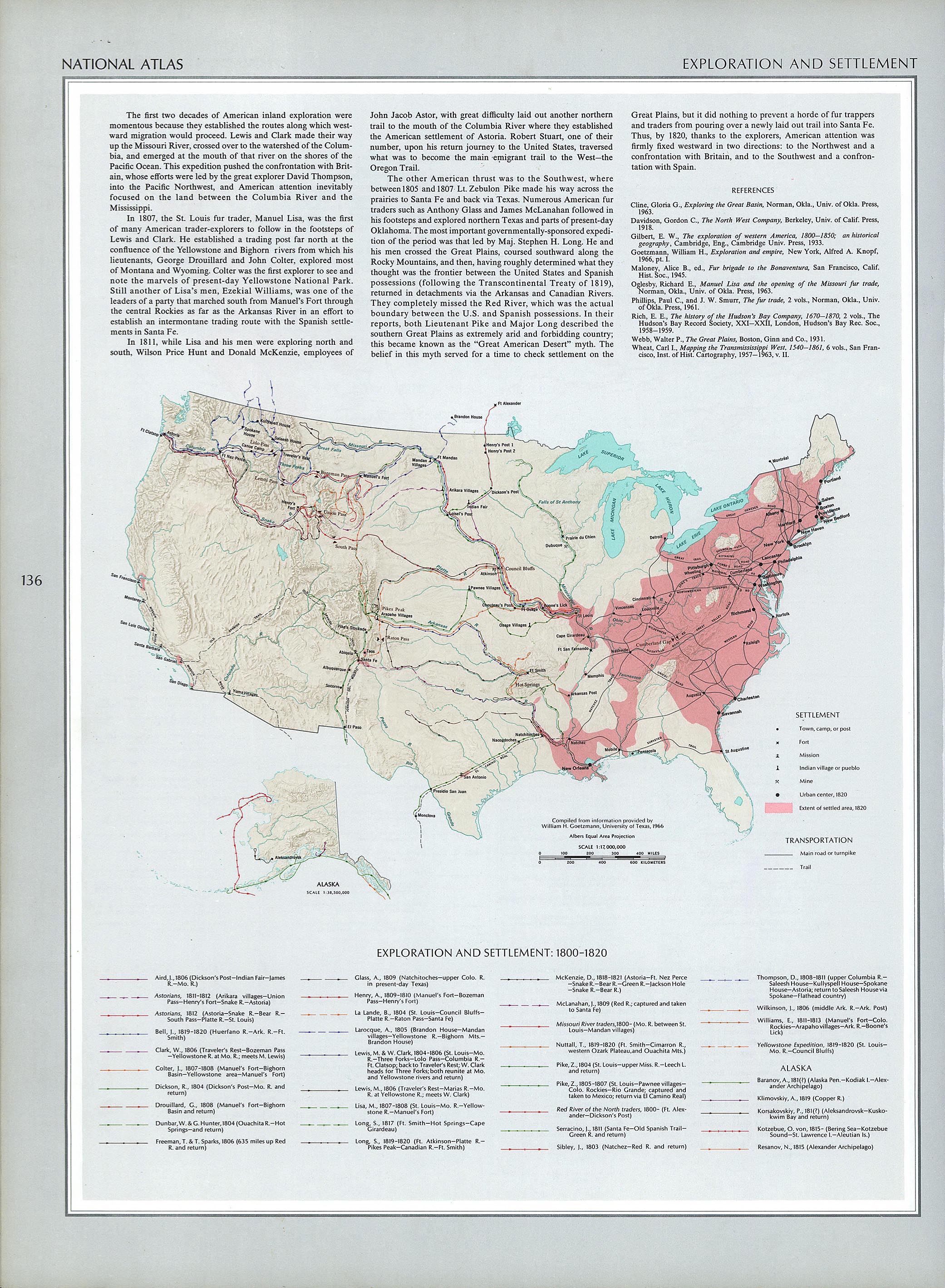
Exploration 1800
A map of the various routes to the west.
Basic Facts About the Oregon Trail
Great summary of what the pioneers faced from the BLM.
Activities
Growth of a Nation
Animated Atlas presents “Growth of a Nation,” a ten-minute presentation on America’s expansion from the original thirteen colonies.
Building a Sod House
Interactive activity from the Smithsonian where you are settling on the open prairie. How will you build your house?
Westward Expansion
8-page download from the National Park Service covering early explorers, ranchers, and miners. Includes several activities, vocabulary, and an interesting timeline.
Books

Tree in the Trail by Holling C. Holling
A favorite about the life of a cottonwood tree along the Santa Fe Trail. Enjoy our full review and suggested book activities!
The Prairie Traveler
Written by Capt. Randolph B. Marcy in the mid-1800s, this was one of the handbooks the green pioneers used to guide their way.

Buffalo Bill
One of the beloved d’Aulaire books republished by Beautiful Feet Books.
Journal of Travels Over the Rocky Mountains
This journal by Joel Palmer describing his trip west reads like a book.

Little House on the Prairie
What better way to travel with the pioneers than through the Laura Ingalls Wilder books?

Westward Ho!: An Activity Guide to the Wild West by Laurie Carlson
A fun activity guide covering horses, Lewis and Clark, fur traders and mountain men, the Gold Rush, covered wagons, the prairie, and the range.
Unit Studies & Lesson Plans
Free History Studies: Horace Greeley
More about Horace Greeley along with more information and resources from our free history studies.
Go West, Young Man!
32-page Core Knowledge unit aimed at younger students that includes many hands-on activities along with printables at the end.
Westward Expansion
37-page Core Knowledge lesson plan for primary grades covering the modes of transportation for westward movement, the reasons people traveled west, and the Trail of Tears. Printables, quizzes, and a Jeopardy-type game included.
Westward Expansion: A Writer’s Perspective
Another Core Knowledge lesson plan covering maps, pioneers, daily pioneer life, the Pony Express, and the Trail of Tears. This 21-page download includes nice handouts, activities, and a test.
Notebooking Pages & Printables
Migration Trails
Map for notebook.
United States Map
From GISGeography.com.
NASA Outline Maps
Set of maps for activities above.
Go West, Young Man Notebooking Pages
Simple pages for copywork, narrations, and wrapping up.
These units have been created specifically with do-it-yourself (DIY) homeschoolers in mind: those that don’t want a lot of hand-holding. If this doesn’t describe your need, you might prefer a few of these pre-planned units. For those brave souls who enjoy pulling things together themselves, there are many ways to use these resources!
Ready for More?

Enjoy our other Westward Expansion units!