
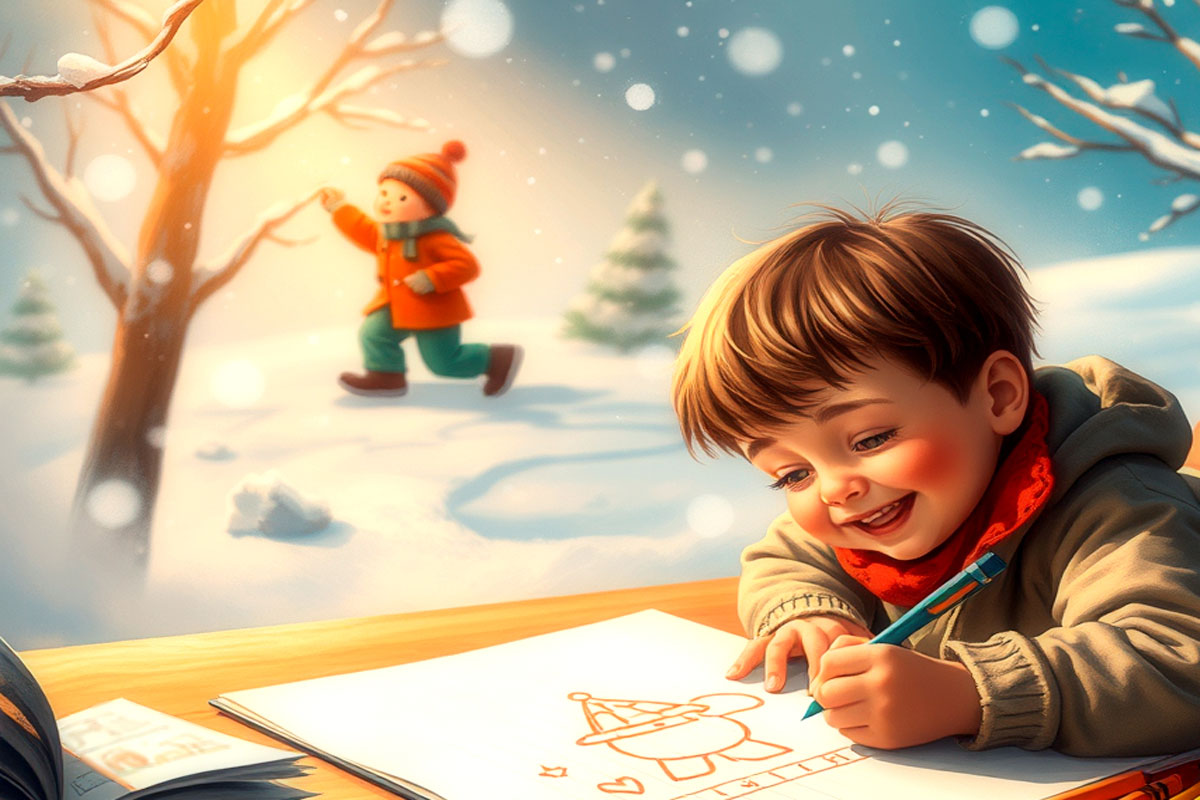

Complete the story is a form of story starter that uses a few sentences or a few paragraphs to set the scene, characters, and other background information. The student then takes it from there, completing the story. The younger student can complete the story by drawing a scene of what happens next.
One easy path to writing is to finish a story. This shortcut can be handy when a child isn’t feeling too creative.
If you introduce writing by having your child copy, then move to narrations (oral or written), and here and there try dictation, then your child will likely be ready for this exercise.
In a short story, there will be a problem to solve and a solution. While older students familiar with the short story form will have no problem with completing a story, younger students can focus on what happens, and simply draw their answer.
Examples:
What Happened to John
John was playing in the snow this morning. The wind blew his hat off. He ran to pick it up. The ground was very slippery.
Draw what you think happened to John and tell your story.
The Lincoln Reader
The idea is to promote creativity and writing skills. So keep it simple!
Suggestions
Have your students do one or more of the following:
- Create a story prompt and write it on a sheet of drawing and writing paper. Have your student draw what happens next.
- Choose a current story you are reading aloud and have your student draw what happens next before your turn the page.
- Ask your student to narrate orally what he thinks will happen next during your next read aloud. Then just ask him to draw an illustration.
- Use some of the story prompts below. Have your student copy one or two sentences on Drawing and Writing paper and illustrate what happens next.
- Read the first page of “Washington and His Hatchet” from Stories of Great Americans for Little Americans. Have your child illustrate what he thinks happens next. Read the second page. Was he correct?
- Read aloud “The Bluebird” from Bird World. End with the question on pg. 17: “How did I know, do you ask?” Have your student draw the answer.
- View this painting by Winslow Homer called Snap the Whip. Have your student draw what she thinks happens next.
- Use the list of ideas above to create your own!

Write Something Every Day: 366 Pencil Sharpeners for Students of Writing
Our book will get you started. This huge 554-pg. resource provides carefully crafted writing prompts and challenges for each day. We use nearly 20 different forms of writing to keep the student engaged. Also included are writing instruction, tips for modifying assignments for “younger writers,” and other resources. Learn more.
Additional Resources
Writing Ideas: Complete the Story
Includes a variety of resources that will work well here, too.
Activity: Storytelling Prompts
Storytelling prompts encourage a student step by step through the process of creating his own story. For older students.
What Happens Next?
Three prompts from K12Reader.com.
Keep Reading

Activity: Steps for Developing Storytelling Skills
For beginning writers, retelling the best stories is the first step in developing our writing skills. Steps for developing storytelling skills.

Activity: Storytelling Prompts
Storytelling prompts encourage a student step by step through the process of creating his own story.

.jpg)