


Just as it sounds, a persuasive essay seeks to change opinions on a topic. It reflects the opinion of the writer.
What is a Persuasive Essay?
It is similar to a news story in that the strongest most important information comes first; the remainder of the supportive points follow in order of strongest to weakest.
It is similar to a descriptive essay in that the writer has a point to make.
But a persuasive essay is different in that it will advance an opinion.
What Are the Elements of a Persuasive Essay?
A good persuasive essay typically includes the following elements:
- Reflects an opinion.
- Provides arguments supporting the opinion.
- Typically presents a solution to a problem.
- Seeks to change minds.
- Typically ends with a call to action.
- The topic is typically a timely one.
- Professional in tone.
- Typically appeals to the reader’s emotions as well as intellect.
An Example
Let’s look at an example:
School Choice — An Educational Custom Fit (archived)
Using the bulleted points in the list above, determine how each point applies to the essay.
How Do I Write a Persuasive Essay?
First, decide what you feel strongly enough about to write an essay that encourages change in others. Then consider:
- What point would you like to make?
- Who is your audience?
- What argument is most likely to move your audience?
After you have the topic in hand, make a list of your supporting arguments. For each argument include one or more of the following to back up your opinion:
- Facts.
- Statistics.
- Quotes from an authority on the topic.
- Observations from real life.
Write a strong opening statement — don’t equivocate or couch terms. Keep your first paragraph brief with a tight focus on the issue. How will your opening statement provide an emotional and/or intellectual appeal to your reader?
Clearly state your first and strongest argument. Develop the argument by stating facts, statistics, observations, authoritative quotations, or other supporting information.
Then continue with your next strongest argument, and so forth, until you have several paragraphs.
Develop a strong conclusion by restating your opinion and requesting action on the part of your reader.

Learn to Write, Write!: A DIY Writer’s Companion
Ready to get started writing? Learn to Write: Write! is your guide to discovering and practicing the art of writing. Cover the basics, such as finding something to write and overcoming fears, to more advanced topics like revising your work and cultivating your voice and style. The book gets out of the way as great writers and their writing encourage you to apply their ideas to your own writing. Put pencil to paper and stretch your abilities as you learn by doing. Learn more.
Suggestions
Have your students do one or more of the following. You’ll find helpful resources below.
- Find other examples of persuasive essays. Op-eds in the newspaper are one good source.
- If you are new to the process, you may appreciate the five-paragraph template to get you started.
- Be sure to choose a topic that is timely and that you feel strongly about. What makes you a particularly good candidate for writing about this topic? What special connection to the topic do you have?
- If you are still searching for a topic, check the current news stories for ideas.
- Work hard on that first sentence. You want to capture your reader’s attention! If the reader likes your first line, he will continue reading.
- Use clear and precise language.
- Use the active voice. For example:
- We must consider how our children will be taught to ensure they receive a quality education. (passive)
- We must consider how to provide our children with a quality education. (active)
- Don’t forget to tell a story. Throwing data at a reader alone does not typically convince. You want to emotionally touch your readers, not pound them over the head with facts.
- Related to the above point, use humor where it will be effective.
- One of my favorite business writing teachers always indicated that you did not need to say “I think.” You are writing the essay. We know it is you who think it. So simply state your opinion without the wordy introduction.
- You may find it helpful to state the opposing opinion. If you do so, state it fairly. Then provide your solution to the opposition opinion.
- Persuasive writing is typically short. A simple, concise, and brief essay will provide more punch than a long, rambling oratory.
Additional Resources

Write Something Every Day: 366 Pencil Sharpeners for Students of Writing
Our book will get you started. This huge 554-pg. resource provides carefully crafted writing prompts and challenges for each day. We use nearly 20 different forms of writing to keep the student engaged. Also included are writing instruction, tips for modifying assignments for “younger writers,” and other resources. Learn more.
Persuasive Essay Outline (archived)
Extensive example of the five-paragraph essay.
How to Write A Persuasive Essay
Simple help at WriteExpress.com.
60 Persuasive Essay and Speech Topics
Help from K12reader.com if you are stuck for ideas!
Opinion Writing Basic Outline
Graphic at Scholastic.
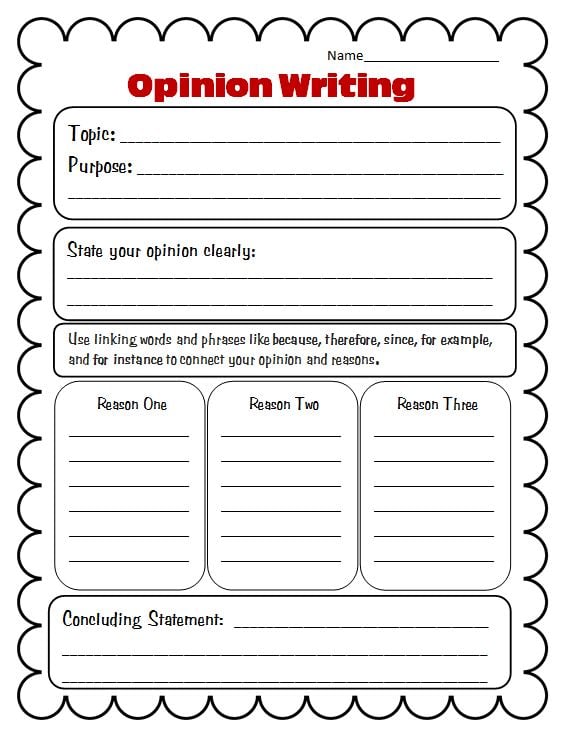
Persuasive Argument Writing Graphic Organizer
Free download (with free membership) at TeachersPayTeachers.com.
