

Sergei Prokofiev was born on April 23, 1891, in a small village in Ukraine. He is best known for his “Peter and the Wolf” composition.
Early Life
He was a child prodigy composing his first pieces on piano at the age of 5. After studying music at the St. Petersburg Conservatory he traveled widely, but his homeland was where his heart was, and the Soviet Union was where he finally settled in 1936.
It was at this time that he wrote “Peter and the Wolf” for Russia’s Central Children’s Theatre in a space of about two weeks — finishing the composition in four days and the orchestration in about a week.
The Composition
“Peter and the Wolf” is a folk story told with instruments of the orchestra.
Young Peter has been warned by his grandfather to stay out of the meadow because if a wolf were to come out of the forest he would be in danger.
Sure enough, Peter watches as a gray wolf does come out of the forest. The wolf begins harassing a duck, bird, and cat Peter befriended earlier.
Wasting no time, Peter comes up with a plan to save the creatures from the wolf. His plan works. Two hunters who were tracking the wolf help Peter take the wolf to the zoo.
The Characters
In the composition, each character in the story is represented by a different instrument:
- Peter — strings.
- Duck — oboe.
- Bird — flute.
- Cat — clarinet.
- Grandfather — bassoon.
- Wolf — French horns.
- Hunters — timpani.
The Impact
In the spring of 1936, I started a symphonic tale for children titled ‘Peter and the Wolf,’ Op. 67, to a text of my own. Every character in the story had its own motif played each time by the same instrument…. Before each performance, the instruments were shown to the children and the themes played for them; during the performance, the children heard the themes repeated several times and learned to recognize the timbres of the different instruments. The text was read during the pauses in the music, which was disproportionately longer than the text — for me, the story was important only as a means of inducing the children to listen to the music.
Sergei Prokofiev’s diary
Recorded dozens and dozens of times by symphonies and orchestras all over the world, the story of remains an innovative way to introduce children to the orchestra.
Suggestions
Have your students do one or more of the following:
- Listen to one of the recordings below. Identify each character listed above.
- Tell the story.
- Illustrate the story on drawing and writing paper.
- Which character is your favorite? Write a character study or use this interactive to create a character trading card.
Additional Resources
Peter and the Wolf
A short summary to read before listening to the composition.
Peter and the Wolf Turns 75
NPR look at Prokofiev and the composition.
Recordings
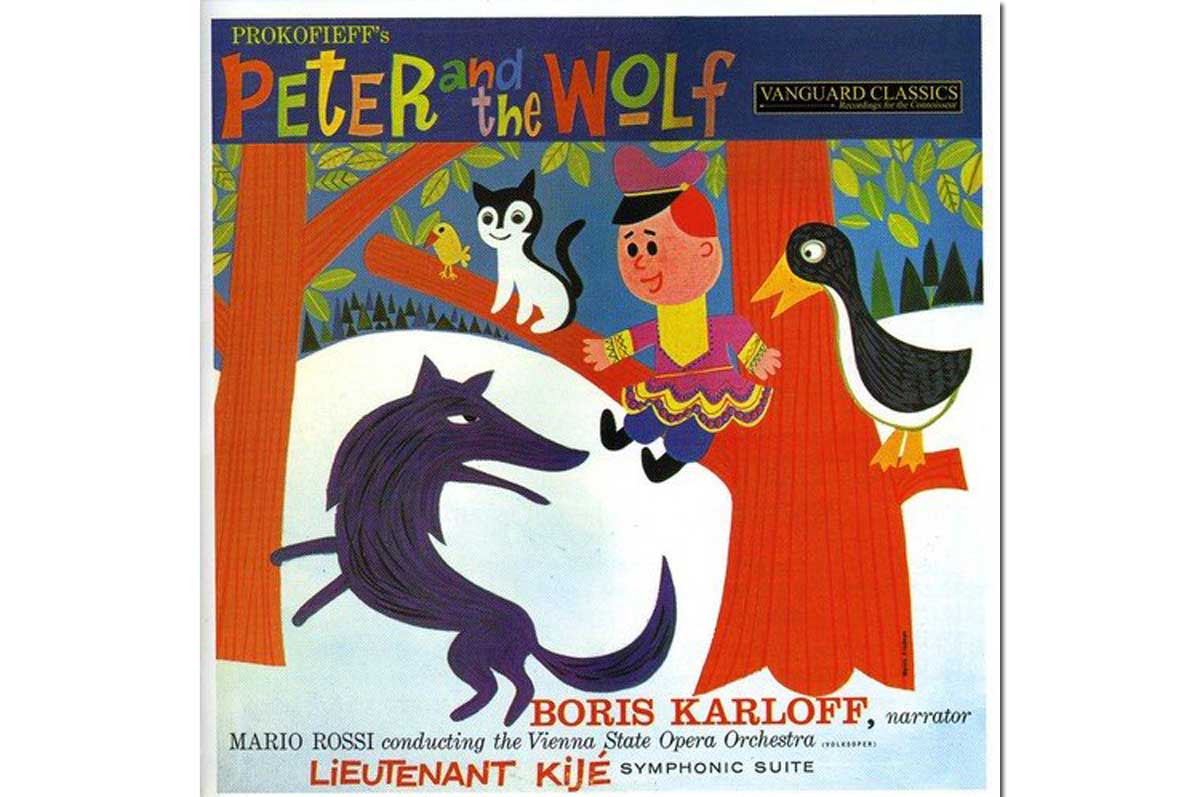
Boris Karloff, Mario Rossi
Classic version and our favorite!
“Peter and the Wolf”
All American Orchestra with Basil Rathbone narrator.
“Peter and the Wolf”
Boston Symphony Orchestra with Eleanor Roosevelt narrator.
Activities
Sergei Prokofiev: Peter and the Wolf
Classics for Kids show explaining the composition.
Sergei Prokofiev
Activity sheet from Classics for Kids.

Young Person’s Guide to the Orchestra ~ Featured Site
Another wonderful introduction to the orchestra.
Unit Studies & Lesson Plans
The Character of Instruments
Lesson plan from the Dallas Symphony Orchestra.
Music Can Tell a Story
Also from the DSO.
Peter and the Wolf: A Musical Story
Great site for understanding the storyline and how the characters are represented. Also includes writing prompt.
Peter and the Wolf (archived)
Wonderful 24-page download from the Fort Worth Symphony Orchestra.
Character Map
Colorful download from the St. Louis Symphony Orchestra.
Listening Map (zip file)
Great printout hosted at ClassicsForKids.com to help tie what is heard to what is happening.
Peter and the Wolf
Lesson plans from the West Virginia Symphony.
Printables & Notebooking Pages
Drawing & Writing Notebooking Paper {Free Download}
Room at the top for illustrating and room at the bottom explaining what is going on while listening.
These units have been created specifically with do-it-yourself (DIY) homeschoolers in mind: those that don’t want a lot of hand-holding. If this doesn’t describe your need, you might prefer a few of these pre-planned units. For those brave souls who enjoy pulling things together themselves, there are many ways to use these resources!
Keep Reading

Free Music Studies: Child’s Own Book of Great Musicians
The Child’s Own Book of Great Musicians series is a wonderful introduction to the great composers. 13 free lessons + review.

10 Easy Ways to Incorporate Music Appreciation
We learn to appreciate music by listening. 10 easy ways to make it happen!

Free History Studies: The Star-Spangled Banner
Francis Scott Key wrote the words to the Star-Spangled Banner upon seeing the Stars and Stripes flying over Fort McHenry. Unit resources.